
Applications
Ceramic-Look and Sesame Glass Marbles: Matching an Opaque Finish to Vase, Planter and Aquarium Use
When an opaque porcelain-style or speckled sesame glass marble outperforms clear glass, which diameters suit decor and aquarium channels, and how to specify the finish.
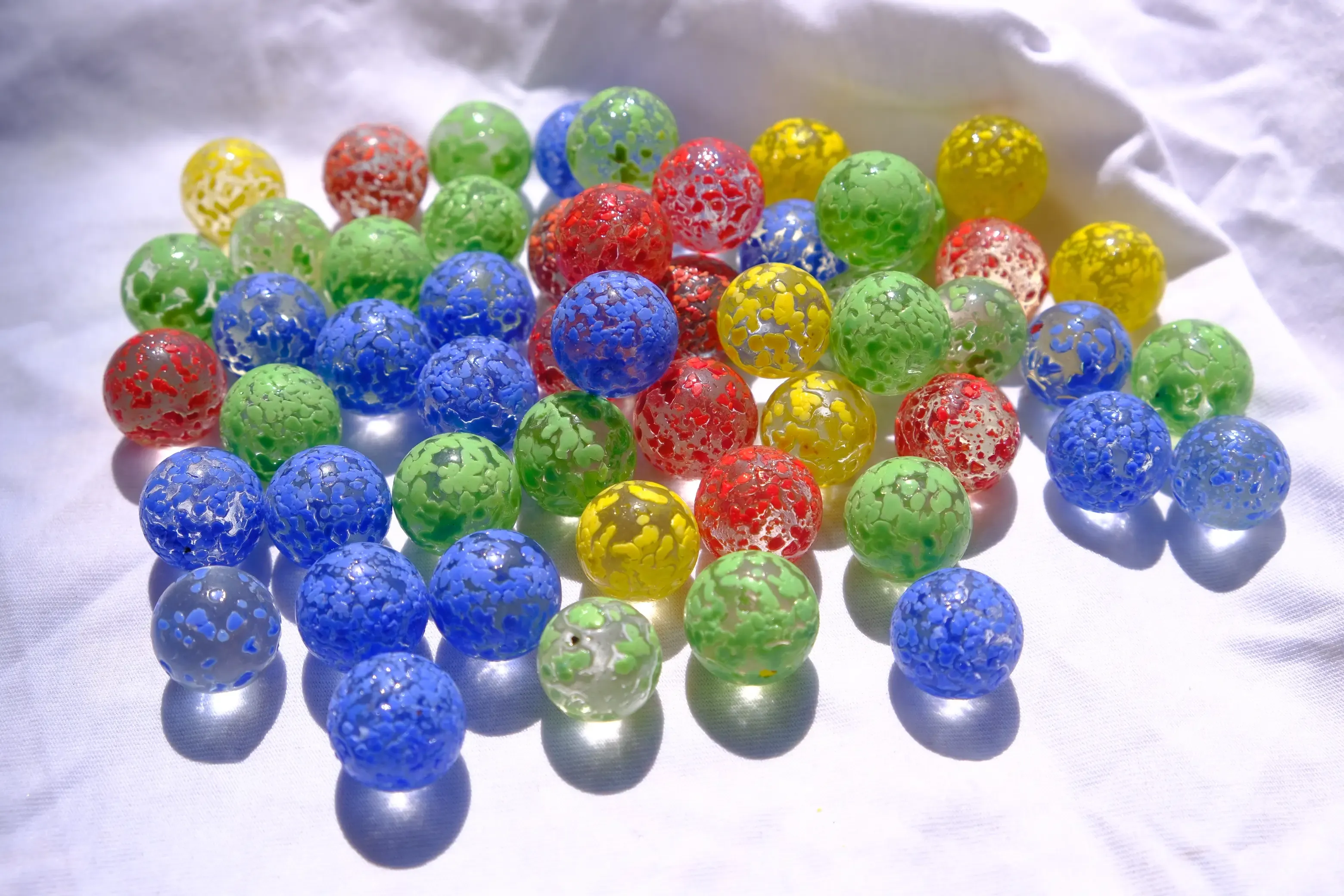
Opaque ceramic-look and speckled sesame glass marbles solve one specific problem: a clear marble disappears against a busy background, while an opaque one holds its colour and shape. SunWard Products Co., Ltd. manufactures both finishes from 9 mm to 35 mm in Zibo, Shandong, in 100% glass. This guide covers which finish to specify, which diameters suit decor and aquarium channels, and what to confirm before a bulk order.
Two finishes that both read as ceramic
The family splits into plain opaque colour and speckled. Plain opaque — white, red, green, yellow — reads as glazed porcelain and holds a flat, solid colour across the surface. Speckled, often called sesame, carries dark flecks on a light body and reads as stone or terrazzo. Both are glass, not ceramic, and both are polished rather than glazed.
The distinction matters for the buyer because the two finishes photograph differently. Plain opaque produces a clean colour block that is easy to colour-match on a packaging mock-up; speckled adds visible texture, which reads as premium in a decor listing but makes exact repeat matching harder.
Where an opaque finish beats clear glass
Use opaque where the marble has to stay visible: vase filler in a coloured or patterned vessel, top dressing on a planter where the surface competes with soil and foliage, candle arrangements, aquarium substrate against a printed background, and craft projects where a matte-looking fill is wanted instead of a transparent one.
Use clear glass where light transmission is the point — narrow-neck vases, water features, and any application where the marble should read as water rather than as a solid object.
Sizes and packing for decor and aquarium channels
The common decor sizes are 13 mm and 16 mm in bulk, with 19–25 mm for larger arrangements and 35 mm for showpiece pieces. Aquarium substrate usually runs 9–16 mm so the layer reads as gravel rather than as individual objects. Because these channels sell in small units, packing matters as much as the marble: retail options include net bag with header card 50–500 pcs, PVC bag 250 g–2 kg, glass jar for gift, and PVC box for gift or display.
For aquarium use, confirm the glass is inert and uncoated. A dyed or surface-coated marble can affect water chemistry, and no coating is used on SunWard's marbles — the colour is in the glass.
Specifying a speckle or opaque colour
Three things need to be fixed in writing: the base colour, the speckle density if speckled, and the diameter band. Base colour is the easier of the three to repeat; speckle density is a production characteristic and will vary slightly between runs, so the approved sample is the control rather than a numeric specification.
SunWard's minimum order is 1 ton with popular sizes held in stock, payment T/T, shipping worldwide. For a decor or aquarium range that mixes several colours, ask for a mixed-pack ratio at the same time as the price — the ratio changes the packing cost more than the marble does.
FAQ
Are porcelain-look glass marbles actually ceramic?
No. They are glass marbles produced with an opaque body so they resemble glazed porcelain. The material is 100% glass, polished rather than glazed. That distinction matters for aquarium use, where an unglazed inert glass is what you want, and for any market that restricts ceramic glazes.
Will the speckle pattern be identical from batch to batch?
Speckle density is consistent but not identical between production runs, because the speckle is formed in the glass rather than printed on the surface. The workable control is a retained approved sample held against each lot. Confirm the look on a sample before committing to bulk.
Which size should I use for a vase or planter?
13–16 mm is the common decor size, with 19–25 mm for larger arrangements and 35 mm for centrepieces. For a narrow-neck vase, check the neck opening against the diameter — a 25 mm marble will not pass a 20 mm neck. 9–12 mm suits narrow vessels and aquarium gravel.