
Applications
Are Glass Marbles Safe for Aquariums? Inertness, Coating and Substrate Sizing
Glass is inert in water, but dyed and coated marbles are not. What to test on a sample, which diameter suits which tank, and how to buy aquarium-grade marbles in bulk.
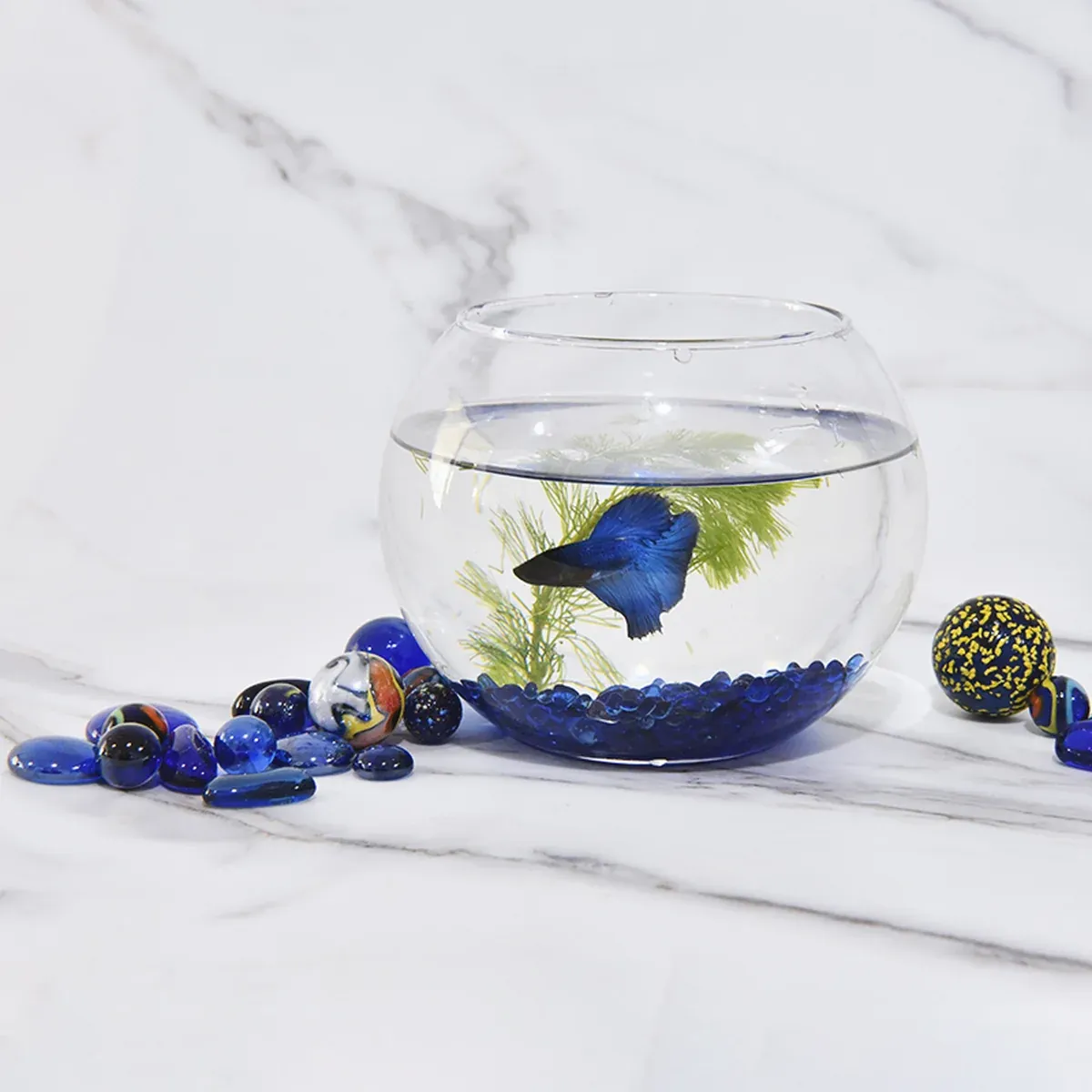
Uncoated glass is inert in freshwater and will not leach into an aquarium, so a plain glass marble is safe as substrate. The risk is not the glass — it is the dye, the coating or the finish applied on top of it, which is what buyers need to screen before filling a tank. SunWard Products Co., Ltd. manufactures 100% glass marbles from 9 mm to 35 mm in Zibo, Shandong, uncoated, and supplies them for aquarium substrate, vase filler and decorative use. This guide covers what to test on a sample, which diameter suits which tank, and what to confirm before ordering in bulk.
Glass is inert; the coating is the risk
A plain soda-lime glass marble does not react with water, does not raise pH and does not release anything into the water column. A dyed, spray-coated or lacquered marble is a different object: the colour sits on the surface and can flake or leach over time, particularly in warm water or under UV light. For aquarium use, specify uncoated glass with the colour in the glass, not on it.
This is also why opaque and speckled marbles are acceptable — the colour is formed inside the glass body rather than applied to the surface. SunWard's range, including the ceramic-look and speckled finishes, is 100% glass with no surface coating.
How to test a sample before you fill a tank
Run these four checks on a sample before committing to a bulk order: (1) soak a handful in a glass of tank water for 48 hours and check the water stays clear with no colour shift or film; (2) rub two marbles together — a coated marble will scuff and show a lighter core; (3) check the edges under bright light for chips, because a chipped marble in a tank is a hazard to bottom feeders; (4) confirm with the supplier in writing that the product is uncoated glass.
The soak test is the one that matters. It is cheap, it takes two days, and it catches the failure that no specification document will show you — a surface treatment that is fine dry and unstable wet.
Substrate sizing by tank type
Match the diameter to the tank and the inhabitants, not to a preference: 9–12 mm for small bowls and narrow-neck vases, where a larger marble will not pass the opening; 13–16 mm as the general aquarium substrate size that reads as gravel rather than as individual objects; 19–25 mm for larger tanks and display bowls where the marbles are a design element; 35 mm for showpiece single-ball decoration.
For tanks with bottom-feeding fish or shrimp, prefer the smaller end of the range and check the surface for chips — a 25 mm marble with a chipped edge is worse in a tank than a 12 mm smooth one. If the marbles are purely decorative and sit outside the water, the size constraint disappears.
Sourcing aquarium-grade marbles in bulk
Three things to confirm in the purchase order: that the product is uncoated glass, that the diameter band is specified in millimetres, and that the packing suits retail or bulk. Retail formats that work for aquarium supply are net bags of 50–500 pcs, PVC bags of 250 g–2 kg and glass jars for the gift and decor channel; bulk orders ship in 20–25 kg export cartons or woven bags.
SunWard's minimum order is 1 ton, payment T/T, shipping worldwide, with popular sizes held in stock. For a first aquarium range, ask for a mixed-colour assortment at a fixed ratio together with the price — the ratio affects packing cost more than the marble does.
FAQ
Are glass marbles safe for fish tanks?
Uncoated glass marbles are safe: glass is chemically inert in water and does not raise pH or release anything into the water column. The risk is dyed or surface-coated marbles, where the colour can flake or leach. Specify uncoated glass with the colour formed inside the glass.
How do I tell if a marble is dyed or coated?
Rub two marbles together and look at the contact point — a coated marble scuffs and shows a lighter core, while a solid-colour glass marble stays the same colour throughout. A 48-hour soak in tank water also reveals a surface treatment: the water stays clear for uncoated glass.
What size marbles should I use for an aquarium?
13–16 mm is the general substrate size, reading as gravel rather than individual objects. Use 9–12 mm for small bowls and narrow openings, 19–25 mm for larger display tanks, and 35 mm for decorative showpieces. For bottom feeders, prefer smaller and chip-free.
Can you supply aquarium marbles in retail packing?
Yes. Retail formats include net bags with header cards at 50–500 pcs, PVC bags at 250 g–2 kg and glass jars for gift and decor channels. Bulk ships in 20–25 kg export cartons or woven bags. Minimum order is 1 ton on T/T terms.