
Applications
Cat's Eye Glass Marbles: Choosing Petal Count and Diameter for Games, Crafts and Aquariums
How 2, 3, 4 and 8-petal cat's eye glass marbles differ, which diameters suit which products, and how to control pattern consistency before a bulk order.
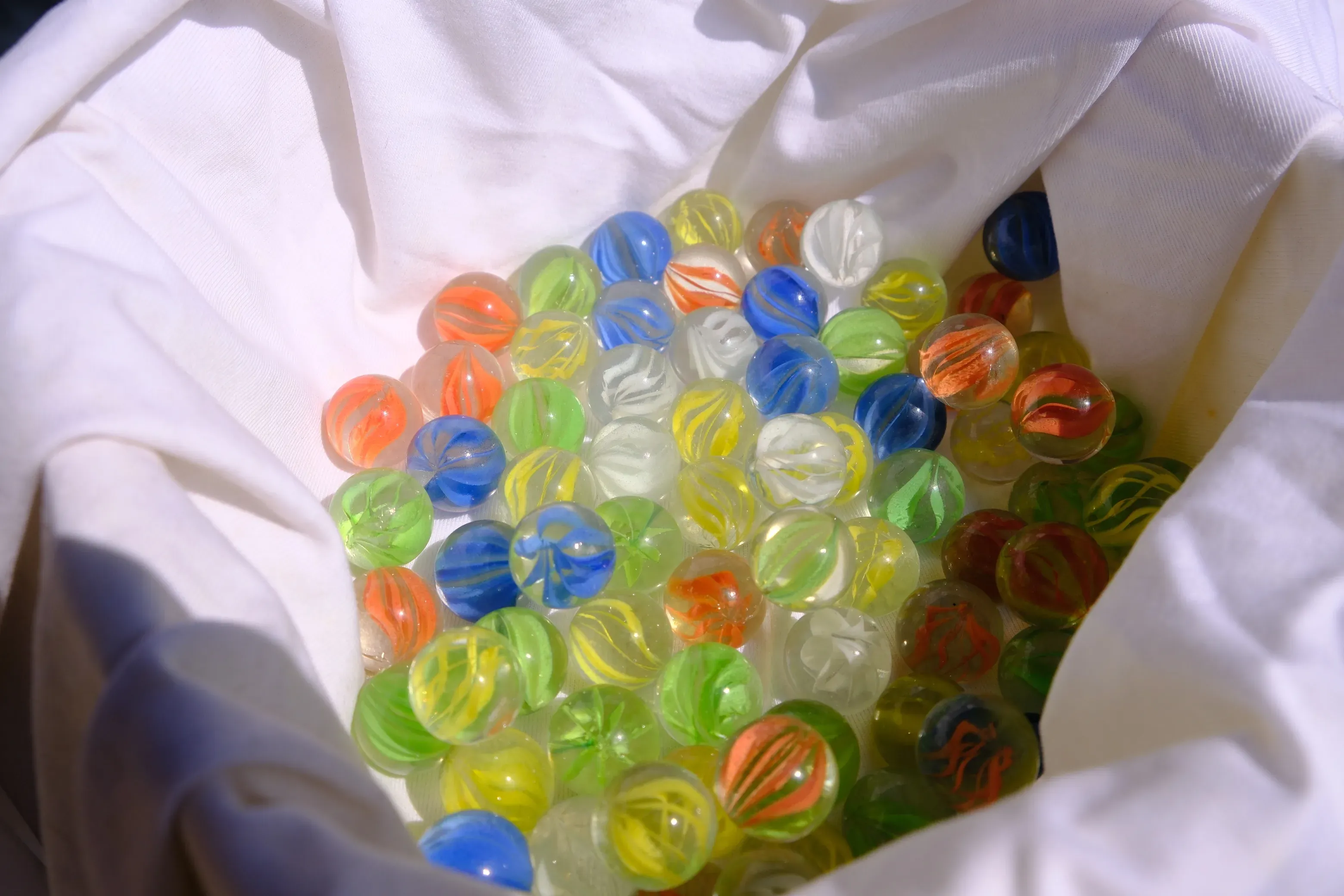
Cat's eye glass marbles hold a coloured petal pattern inside a clear glass body, and the petal count is the specification that changes most between orders. SunWard Products Co., Ltd. manufactures them in 2, 3, 4 and 8-petal patterns from 9 mm to 35 mm at our factory in Zibo, Shandong. Eight petals is the bulk trade standard for games and toys; two, three and four-petal variants give a simpler graphic look for craft and decorative packs. Here is how to choose between them.
What the petal count actually changes
Petal count changes the visual reads at a distance, not the price tier. Eight petals fill the ball with colour and stay legible in a bulk bin or a game set photographed for e-commerce; two and four petals leave more clear glass visible, which reads as a cleaner, more graphic marble in a vase or a craft kit. Three petals is the least common pattern and is usually specified for a specific product line.
The pattern is formed from coloured glass rods bundled before the ball is shaped, so the petal count is set in the tooling rather than printed on afterwards. That means it cannot be changed mid-run, and a change of petal count is a new production setup.
Diameter ranges and what each size suits
Match the diameter to the product: 11 mm and 14 mm for small game pieces and filler; 16 mm as the general-purpose size for toy and craft supply; 19 mm and 25 mm for display and larger game pieces; 35 mm for showpiece and centrepiece use. SunWard produces the full 9–35 mm range on the same lines, so one supplier can cover a mixed order.
Size consistency matters more than the nominal figure. Ask how the diameter is screened and what the accepted band is, then confirm it in writing — a game piece that is noticeably out of round gets returned by the end user, not by your QC team.
Controlling colour and pattern consistency across batches
Lock three things before production: the approved sample, the colour reference, and the tolerance band. Because the pattern is made from coloured glass rather than applied to the surface, exact colour matching between separate runs is not guaranteed. The workable control is a retained sample held against each lot, with bulk checked against it.
If the order ships in more than one production run, say so up front. SunWard's capacity — 50 lines, 30,000 tonnes a year — means volume is rarely the constraint, so splitting a large order into runs can usually be planned to keep visible colour drift out of a single shipment.
Ordering cat's eye marbles at volume
Four inputs make a cat's eye quotation: petal count, diameter, colour range and packing format. Add the destination port and the required certification, and the quotation becomes comparable with another supplier's. SunWard's minimum is 1 ton, payment is T/T, and popular sizes are held in stock.
For a first order, ask for the packing options together with the price. A cat's eye marble quoted in a 20–25 kg export carton and the same marble quoted in a 500 pcs hangable net bag are different products with different landed costs.
FAQ
Is an eight-petal cat's eye better than a four-petal one?
Neither is better; they read differently. Eight petals is the standard bulk pattern for games and toy supply because it fills the ball with colour and photographs clearly. Two and four-petal patterns show more clear glass and suit craft and decorative packs. Choose by how the product will be displayed.
Which size is most common for toys and games?
16 mm is the general-purpose size for toy, game and craft supply. 11–14 mm suits smaller game pieces and filler, while 19 mm and 25 mm are used for display and larger pieces. SunWard produces 9–35 mm, so mixed sizes can ship in one order.
Can the petal pattern be produced in a custom colour?
Yes, within production setup limits. Custom petal colours are scheduled as a production run against an approved sample. Because the pattern is formed from coloured glass, exact colour matching across separate runs is not guaranteed, so confirm the match on a sample before committing to bulk.